


Stream data from SQL Server Batch to SQLite
Move data from SQL Server Batch to SQLite in minutes using Estuary. Stream, batch, or continuously sync data with control over latency from sub-second to batch.
- No credit card required
- 30-day free trial


- 200+Of connectors
- 5500+Active users
- <100msEnd-to-end latency
- 7+GB/secSingle dataflow
How to integrate SQL Server Batch with SQLite in 3 simple steps
Connect SQL Server Batch as your data source
Set up a source connector for SQL Server Batch in minutes. Estuary supports streaming (including CDC where available) and batch data capture through events, incremental syncs, or snapshots — without custom pipelines, agents, or manual configuration.
Configure SQLite as your destination connector
Estuary supports intelligent schema handling, with schema inference and evolution tools that help align source and destination structures over time. It supports both batch and streaming data movement, reliably delivering data to SQLite.
Deploy and Monitor Your End-to-End Data Pipeline
Launch your pipeline and monitor it from a single UI. Estuary guarantees exactly-once delivery, handles backfills and replays, and scales with your data — without engineering overhead.
SQL Server Batch connector details
- Log-based CDC for high-performance, low-impact data capture
- Automatic schema evolution to handle changes in source structure without manual intervention
- Unified streaming and batch ingestion in the same pipeline
- Hybrid deployment and BYOC support for security and control
- Fault-tolerant pipelines that resume automatically from the last checkpoint
- Kafka API connectivity for direct integration into streaming ecosystems
SQLite connector details
The SQLite materialization connector writes data from Estuary Flow collections into a temporary, in-memory SQLite database, ideal for demos, testing, and local sandbox environments.
- Purpose-built for testing: Designed for quick prototyping rather than production use
- Ephemeral data: Materialized data is cleared when the connector restarts, though Flow collections remain intact
- Zero configuration: Simply select a collection to materialize—no setup required
- Automatic table creation: Tables are created or updated automatically based on Flow collection schemas
- Reserved word handling: Automatically quotes all reserved SQLite keywords for compatibility
💡 Tip: Use this connector to explore or validate Flow collections locally before deploying to production databases.
Spend 2-5x less
Estuary customers not only do 4x more. They also spend 2-5x less on ETL and ELT. Estuary's unique ability to mix and match streaming and batch loading has also helped customers save as much as 40% on data warehouse compute costs.


SQL Server Batch to SQLite pricing estimate
Estimated monthly cost to move 800 GB from SQL Server Batch to SQLite is approximately $1,000.
Data moved
Choose how much data you want to move from SQL Server Batch to SQLite each month.
GB
Choose number of sources and destinations.
Why pay more?
Move the same data for a fraction of the cost.


Estuary in action
See how to build end-to-end pipelines using no-code connectors in minutes. Estuary does the rest.
What customers are saying
![Together AI avatar]()
![Together AI avatar]()
For AI systems like ours, freshness of data is everything. Estuary gives us sub-second latency without the complexity of maintaining streaming infrastructure ourselves. That reliability means our teams can focus on advancing AI models instead of pipelines.
![Glossier avatar]()
![Glossier avatar]()
Estuary enabled us to finally implement our ERP’s new data endpoint with all our inventory transactions, purchasing, and shipping data. We can now unlock data blocked by cost before, and sync times are much faster and are always being improved by the Estuary team.
Read the Success Story![Xometry avatar]()
![Xometry avatar]()
“Estuary has been a pleasure to work with and has significantly modernized our data infrastructure, delivering real-time and scalable processes that will significantly impact company-wide operations. Every data-driven organization should be looking at Estuary today.”
Read the Success Story![Cosuno avatar]()
![Cosuno avatar]()
Estuary just works. We’ve never had an incident, and it cut our data movement costs in half.
Read the Success Story![Shippit avatar]()
We didn’t want to be locked into a system where faster syncs meant higher bills. Estuary gives us real-time pipelines without pricing games or the burden of running Kafka ourselves.
Read the Success Story![Livble avatar]()
![Livble avatar]()
We needed something self-serve, fast, and reliable, and Estuary delivered exactly that. It’s a huge unlock for our operations, reporting, and machine learning.
Read the Success Story![Resend avatar]()
![Resend avatar]()
Estuary transformed how we operationalize our data for fraud, security, support, and beyond. Instead of unreliable, expensive backfills, we have real-time visibility into platform activity. The proactive support and hands-on approach make all the difference.
Read the Success Story![Recart avatar]()
![Recart avatar]()
Estuary became our real-time data backbone without the cost or complexity of traditional solutions. We replaced a fragile, high-maintenance pipeline with a managed system that just works and scales.
Read the Success Story![Headset avatar]()
![Headset avatar]()
Estuary has been a game-changer for Headset’s data infrastructure. Compared to our previous solutions, it has dramatically improved reliability while reducing our overall costs significantly.
Read the Success Story![Revunit avatar]()
Estuary is our preferred CDC solution for importing data from application databases into BigQuery for analytics. It offers a transparent pricing structure, timely support responses, and an intuitive CLI tool for bulk configuration tasks. In contrast, other market solutions often have ambiguous pricing and fewer options for precise data replication across environments. This makes choosing to use Estuary an obvious decision.
![PDI. avatar]()
Estuary makes tough data transformation problems a piece of cake with its intuitive user interface and incredible breadth of features.
![OneCommerce avatar]()
Estuary is the only SaaS tool that we found which can do a simple loop and calculate COGS from an array of objects nested in a property. We love to write transformations in typescript because it's in the same codebase and super easy to maintain and read. It's a true game changer.
![Minima Global avatar]()
Getting #MINIMA real-time data replication out to the Postgres database was not fun until we found @EstuaryDev it is the best materialization.
![Seattle Data Guy avatar]()
![Seattle Data Guy avatar]()
Estuary makes working with real-time data more cost effective and just as simple as working with batch data.
![Pompato avatar]()
This tool is 1000x times better than LogStash or Elastic Enterprise Data Ingestion Tool.
![DeepSync avatar]()
Estuary allows us to integrate low-latency CDC and connect to SaaS apps across our entire reporting stack and it’s the only solution that we’ve found that lets us do both.
![Fenestra avatar]()
We needed a platform to help us optimize marketing campaigns with low-latency. Estuary provided an unparalleled solution to do that at terabyte scale.

Estuary is the only system we’ve found that can seamlessly replicate large scale Firestore data for analytics. After months of research and trying everything, we can confidently say that Estuary is the only company that can help us get easy, accurate analytics on our data within Snowflake when replicating from Firestore data.

We're a big fan of Estuary's real-time, no code model. It's magic that we're getting real time data without much effort and we don't have to spend time thinking about broken pipelines. We've also experienced fantastic support by Estuary.








Why Estuary is the best choice for data integration
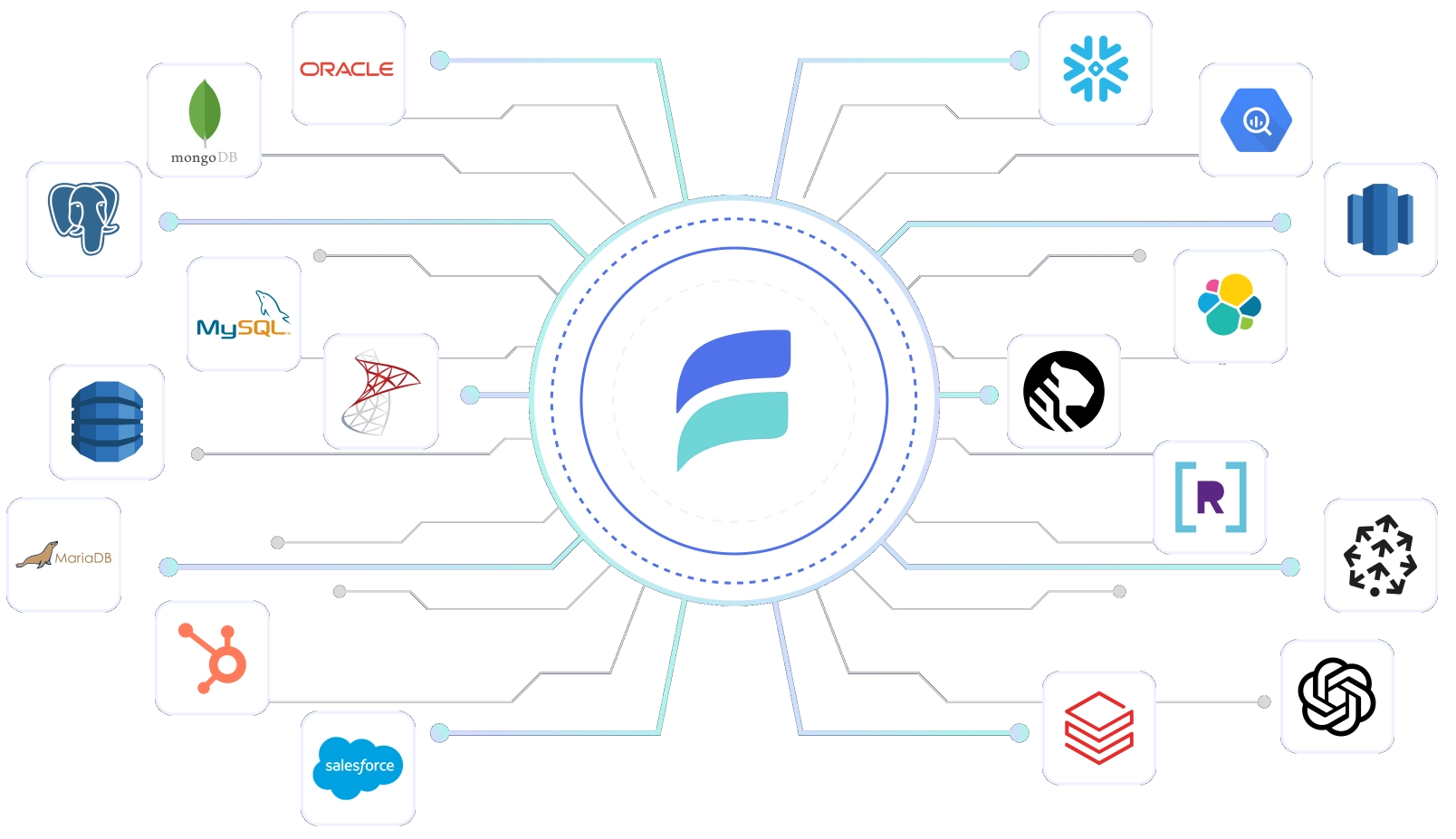
Estuary combines streaming and batch data movement capabilities into a unified modern data pipeline. This approach simplifies building and operating pipelines like SQL Server Batch to SQLite without custom code or orchestration.

Increase productivity 4x
With Estuary companies increase productivity 4x and deliver new projects in days, not months. Spend much less time on troubleshooting, and much more on building new features faster. Estuary decouples sources and destinations so you can add and change systems without impacting others, and share data across analytics, apps, and AI.


Getting started with Estuary
Free account
Getting started with Estuary is simple. Sign up for a free account.
Sign upDocs
Make sure you read through the documentation, especially the get started section.
Learn moreCommunity
I highly recommend you also join the Slack community. It's the easiest way to get support while you're getting started.
Join Slack CommunityEstuary 101
I highly recommend you also join the Slack community. It's the easiest way to get support while you're getting started.
Watch


Frequently Asked Questions
Is this integration suitable for production workloads?
Yes. Estuary pipelines are designed for production use, with exactly-once delivery semantics, automated backfills, and continuous operation at scale.
Can I control where my data runs and is processed?
Yes. Estuary offers multiple deployment options, including fully managed SaaS, private deployments, and bring-your-own-cloud (BYOC). This allows teams to control where their data plane runs and meet security, compliance, and networking requirements. Learn more about Estuary's security and deployment options.
Can I build this SQL Server Batch to SQLite integration manually?
Yes, it's possible to build a manual pipeline using custom scripts, scheduled jobs, or open-source tools. However, manual approaches typically require ongoing maintenance, custom error handling, schema management, and operational overhead. Estuary simplifies this by providing a managed pipeline with built-in reliability, scaling, and monitoring.
Related integrations with SQL Server Batch
DataOps made simple
Add advanced capabilities like schema inference and evolution with a few clicks. Or automate your data pipeline and integrate into your existing DataOps using Estuary's rich CLI.

